Piano Cheat Sheet: A Comprehensive Guide
A piano cheat sheet PDF offers instant access to vital musical information, streamlining practice and performance for musicians of all skill levels.
A piano cheat sheet PDF is an invaluable resource for anyone learning or playing the piano, serving as a quick reference guide to essential musical concepts. These PDFs consolidate crucial information – from chord diagrams and scales to key signatures and common progressions – into a single, easily accessible document.

Whether you’re a beginner struggling to memorize basic chords or an experienced pianist needing a refresher, a well-designed cheat sheet can significantly enhance your practice sessions and performance capabilities. They eliminate the need to constantly flip through textbooks or search online, allowing for a more focused and efficient learning experience.
The portability of a PDF format means you can access your cheat sheet anywhere, anytime – at home, in lessons, or even on stage. It’s a convenient tool for both structured learning and spontaneous musical exploration, fostering confidence and creativity at the piano.
Understanding Basic Music Theory for Piano
A piano cheat sheet PDF often incorporates fundamental music theory concepts, making it a powerful learning aid. These PDFs frequently display scales, intervals, and chord constructions visually, aiding comprehension beyond rote memorization. Understanding these elements is crucial for improvising, composing, and analyzing music effectively.
Many cheat sheets include diagrams illustrating the relationship between notes and chords within different keys, reinforcing the principles of key signatures and harmonic function. This visual representation simplifies complex theoretical ideas, making them more accessible to beginners.
Furthermore, a good PDF will often outline common musical terms and symbols, providing a quick reference for deciphering sheet music. By integrating theory with practical application, these cheat sheets empower pianists to move beyond simply playing notes and towards a deeper understanding of the music itself.

Key Signatures and the Circle of Fifths
A piano cheat sheet PDF frequently features the Circle of Fifths, a vital tool for understanding key signatures and harmonic relationships. These PDFs visually represent the order of sharps and flats, making it easier to determine the key signature for any given scale or chord progression. This eliminates the need for memorizing individual key signatures.
The Circle also clarifies the relationships between keys – relative major and minor, and how keys connect harmonically. Many cheat sheets will display all key signatures alongside their corresponding number of sharps or flats, providing a quick reference during practice or performance.
Understanding the Circle of Fifths unlocks a deeper comprehension of music theory, enabling pianists to transpose, modulate, and improvise with greater confidence. A well-designed PDF simplifies this complex concept, making it accessible to learners of all levels.
Reading Music: Treble and Bass Clef
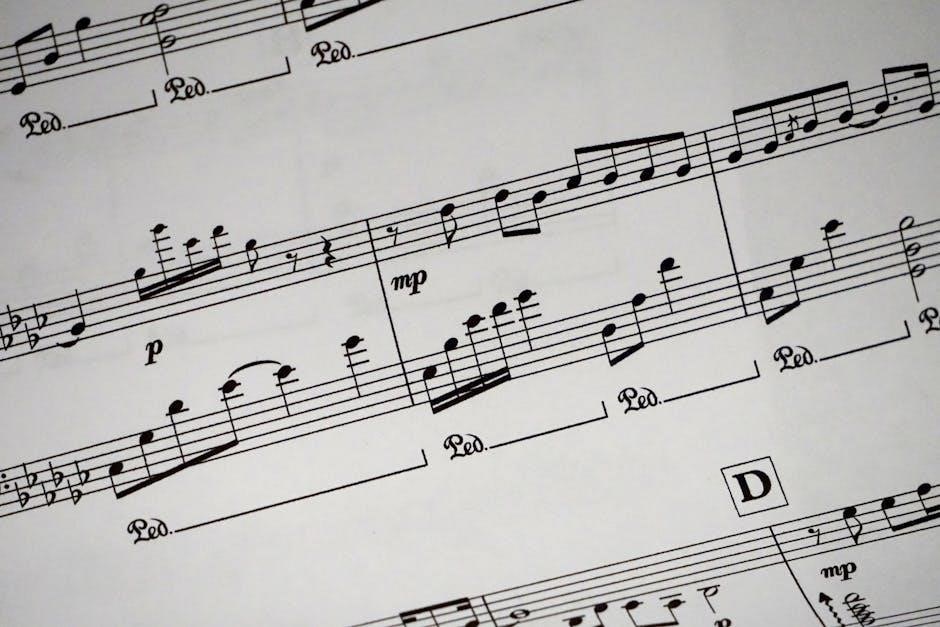
A piano cheat sheet PDF often includes diagrams of the treble and bass clef staves, labeling the notes on each line and space. This is incredibly helpful for beginners learning to identify notes quickly and accurately. These visual aids serve as a constant reference, reducing hesitation during sight-reading.
Many PDFs will also showcase common ledger line notes – those extending above or below the standard five lines – which are frequently encountered in piano music. Some cheat sheets incorporate mnemonics or memory tricks to aid in note recognition, like “Every Good Boy Does Fine” for the treble clef lines.

Having a readily available reference for clef notes within a PDF format accelerates the learning process and builds confidence in reading musical notation, a fundamental skill for any pianist.
Essential Piano Chords
A piano cheat sheet PDF frequently dedicates a significant section to essential chords, visually displaying their fingerings. This is invaluable for quickly learning and recalling common chord shapes. The PDF format allows for clear diagrams showing both the notes within the chord and the recommended hand positions for efficient playing.
These cheat sheets typically categorize chords by type – major, minor, diminished, augmented – and often include variations like seventh chords. Some PDFs offer chord charts organized by key, making it easy to find chords relevant to a specific song or piece.

The convenience of a PDF means instant access to these chord diagrams during practice or performance, fostering faster chord changes and improved musical fluency.
Major Chords: C, G, D, A, E, F
A piano cheat sheet PDF will prominently feature diagrams for major chords – C, G, D, A, E, and F – as these form the foundation of countless songs. These diagrams typically illustrate the finger placement for each chord, often with both hand positions clearly indicated. The PDF format allows for a concise, visual representation, making it easy to memorize these essential shapes.
Many PDFs will also show the notes comprising each chord (e.g., C major = C-E-G), reinforcing music theory understanding. Some advanced cheat sheets might include inversions of these major chords, expanding harmonic possibilities.
Having these major chords readily available in a PDF streamlines practice and allows for quick reference during learning new pieces, accelerating musical progress.
Minor Chords: Am, Em, Dm, Gm, Cm, Fm
A piano cheat sheet PDF dedicated to minor chords – Am, Em, Dm, Gm, Cm, and Fm – is crucial for expanding harmonic color. Like major chords, these are visually represented with finger placement diagrams for both hands, offering immediate practical application. The PDF’s portability ensures access during practice or performance.
These PDFs often include the constituent notes of each minor chord (e.g., Am = A-C-E), solidifying theoretical knowledge. Variations, such as second inversions, may also be included for more advanced players.
Quickly referencing these minor chords within a PDF format significantly aids in learning songs utilizing a more melancholic or dramatic tone, enhancing musical expression.
Common Chord Progressions
A piano cheat sheet PDF focusing on common chord progressions – like I-IV-V and ii-V-I – is invaluable for understanding song structure and improvisation. These PDFs visually map out these progressions in various keys, showing chord symbols and often, fingerings for smooth transitions.
The benefit lies in instantly recognizing these patterns in existing songs and applying them to create original music. A well-designed PDF will present progressions clearly, perhaps color-coded or with rhythmic notation to aid learning.
Having these progressions readily available in a PDF format accelerates the learning process, allowing pianists to quickly grasp harmonic foundations and build a repertoire of songs. It’s a practical tool for both beginners and experienced players.
I-IV-V Progression in C Major
A piano cheat sheet PDF illustrating the I-IV-V progression in C Major will typically display the chords as C Major (I), F Major (IV), and G Major (V). These are often presented with chord diagrams showing finger positions, and sometimes with suggested voicings for a fuller sound.
The PDF might also include variations, such as adding 7ths to the chords (Cmaj7, Fmaj7, G7) to create a more complex harmonic texture. Visual cues, like arrows indicating the chord sequence, are common.
Understanding this progression is fundamental, and a PDF provides a quick reference. It’s a cornerstone of countless popular songs, making it essential for any pianist’s toolkit, offering a clear, concise visual aid for practice and performance.
ii-V-I Progression in C Major
A piano cheat sheet PDF detailing the ii-V-I progression in C Major will showcase D minor (ii), G Major (V), and C Major (I) chords. These are frequently presented with clear chord diagrams, illustrating various fingerings for ease of play and efficient transitions.
The PDF may also demonstrate inversions of these chords, offering alternative voicings to enrich harmonic color. Common variations, like adding 7ths (Dm7, G7, Cmaj7), are often included to provide a jazzier feel.
This progression is a staple in jazz and many other genres, and a PDF serves as a readily available reference. It’s a crucial building block for improvisation and composition, offering a visual guide for mastering this essential harmonic sequence.
Piano Techniques for Beginners
A piano cheat sheet PDF focused on beginner techniques can visually demonstrate proper hand positioning – curved fingers, relaxed wrists, and a balanced posture. Diagrams illustrating correct finger numbering are invaluable for following exercises.
The PDF might include simplified finger exercises, like scales or arpeggios, with suggested tempos and rhythmic patterns. It could also showcase basic dynamics markings (p, f) and articulation symbols (staccato, legato) to introduce expressive playing.
Furthermore, a helpful PDF will emphasize the importance of slow, deliberate practice and consistent repetition. It serves as a quick reference for foundational skills, reinforcing good habits from the outset and building a solid technical base.
Proper Hand Position and Posture
A piano cheat sheet PDF illustrating proper hand position is incredibly beneficial. It should visually depict a relaxed, curved finger shape, avoiding tension or flatness. Diagrams showing the correct wrist alignment – neither too high nor too low – are essential.
The PDF could include images demonstrating optimal posture: sitting upright with a straight back, feet flat on the floor (or a bench), and a comfortable distance from the piano. It might highlight the importance of relaxed shoulders and arms.
Clear annotations pointing out common mistakes, like collapsed wrists or tense fingers, would be valuable. A quick reference guide to maintaining a balanced and efficient technique, promoting injury prevention and maximizing playing comfort, is key.

Finger Exercises for Dexterity
A piano cheat sheet PDF dedicated to finger exercises should showcase a variety of drills for building strength, independence, and speed. Scales and arpeggios, presented with suggested fingerings, are fundamental inclusions. The PDF could visually map out exercises like Hanon or Czerny, broken down into manageable sections.
Chromatic scales, trills, and finger taps are also crucial. Diagrams illustrating proper hand positioning during these exercises are vital. The cheat sheet might include rhythmic variations to challenge coordination and timing.

Including a section on finger independence exercises – isolating each finger’s movement – would be highly beneficial. A clear indication of tempo suggestions (slow to fast) and repetition guidelines will maximize effectiveness and prevent strain.
Resources for Further Learning
A piano cheat sheet PDF is a fantastic starting point, but continuous learning is key! Many websites offer supplementary materials, often mirroring cheat sheet content in interactive formats. Consider exploring platforms like Teoria.com for music theory exercises, complementing the PDF’s foundational knowledge.
YouTube channels dedicated to piano instruction, such as Hoffman Academy or Lypur, provide video tutorials expanding on concepts found within the cheat sheet. Online forums, like PianoWorld, foster community and allow for questions.
Don’t underestimate the value of physical resources; a well-chosen method book or collection of sheet music will accelerate progress. Utilizing a PDF alongside these resources creates a holistic learning experience, solidifying understanding and fostering musical growth.
Online Piano Lessons and Tutorials
A piano cheat sheet PDF serves as a quick reference, but structured lessons build a strong foundation. Flowkey and Skoove offer interactive tutorials, responding to your playing in real-time – a significant advantage over static PDFs. These platforms often incorporate chord diagrams and scale patterns found on cheat sheets.
YouTube is brimming with free content; channels like Pianote and HDpiano provide comprehensive courses, from beginner basics to advanced techniques. Many instructors demonstrate concepts visually, reinforcing what you’ve learned from your PDF.
Consider subscription services for personalized feedback and tailored learning paths. Combining a cheat sheet’s convenience with the guidance of online lessons accelerates skill development and ensures proper technique.
Recommended Piano Books and Sheet Music
While a piano cheat sheet PDF is handy, comprehensive books deepen your understanding. Alfred’s Basic Adult Piano Course is a popular choice for beginners, systematically introducing music theory and technique. For chord voicings and progressions, “The Complete Idiot’s Guide to Music Theory” provides clear explanations.
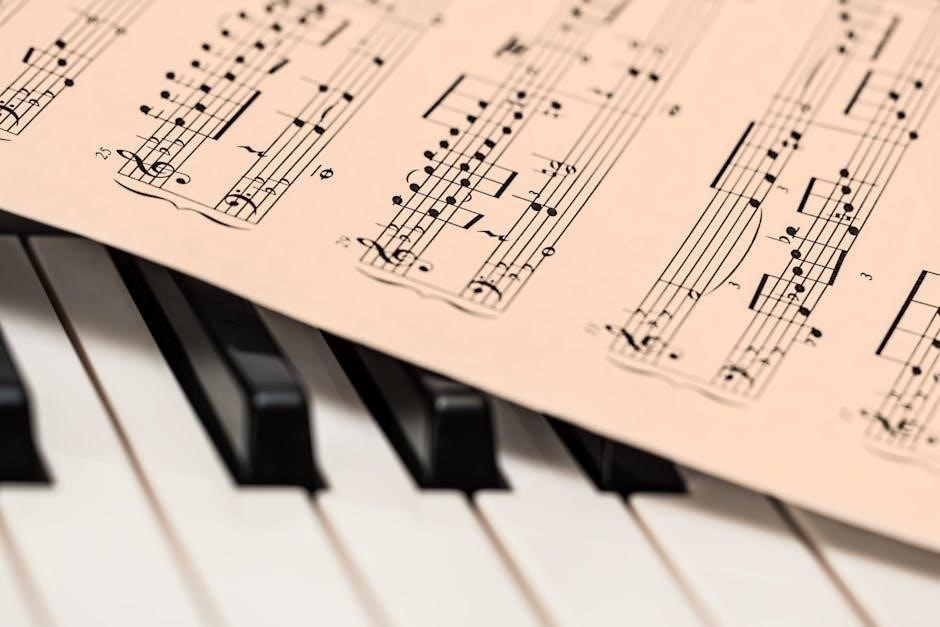
Sheet music expands your repertoire; start with simplified arrangements of familiar songs. Faber Piano Adventures offers graded collections, building skills progressively. Explore collections tailored to your preferred genre – classical, pop, or jazz.
Don’t underestimate the value of a well-curated songbook. Combining these resources with a cheat sheet PDF creates a robust learning environment, fostering both quick reference and in-depth knowledge.
Downloading and Using a Piano Cheat Sheet PDF
A piano cheat sheet PDF is incredibly convenient for quick reference during practice or performance. Numerous websites offer free downloads, but exercise caution regarding source reliability. Ensure the site is reputable to avoid malware or inaccurate information.
Once downloaded, store the PDF on your preferred device – tablet, laptop, or even a smartphone; Utilize a PDF reader app with annotation features to highlight important sections or add personalized notes. Printing a copy allows for physical access during practice sessions.
Remember, a PDF is a supplement, not a replacement, for dedicated learning. Use it to reinforce concepts and quickly recall information, but prioritize consistent practice and theoretical study for lasting progress.
Benefits of a PDF Format
The piano cheat sheet PDF format provides several key advantages for musicians. Portability is paramount; easily access the sheet on any device, anywhere with a PDF reader. PDFs maintain consistent formatting across platforms, ensuring the information appears as intended, unlike potentially altered web pages.
Furthermore, PDFs are often searchable, allowing quick location of specific chords, scales, or key signatures. They are also printable, offering a tangible reference during practice. Annotation features within PDF readers enable personalized notes and highlighting, tailoring the sheet to individual needs.
Finally, PDFs are generally lightweight files, making them easy to share and store without significant storage demands.
Finding Reliable PDF Sources
Locating trustworthy piano cheat sheet PDF resources requires careful consideration. Reputable music education websites, like those of established piano teachers or music schools, are excellent starting points. Many offer free, well-designed cheat sheets as introductory materials.
Online music retailers often provide downloadable PDFs with purchases of sheet music or method books. Beware of unfamiliar websites offering “free” resources, as these may contain inaccuracies or even malware. Always scan downloaded files with antivirus software.
Look for PDFs created by qualified musicians or educators, verifying their credentials if possible. Checking user reviews or comments can also provide valuable insights into the quality and accuracy of the resource. Prioritize clarity and organization in the PDF’s layout.