
LEGO Dom’s Charger (42111) Instructions: A Comprehensive Guide
This guide meticulously details building LEGO Dom’s Charger (42111), covering official instructions, PDF downloads, motorization with 42095, and Light My Bricks integration.
Overview of the LEGO Dom’s Charger Set
LEGO Dom’s Charger (42111) is a highly sought-after set within the LEGO Technic universe, celebrated for its faithful recreation of the iconic 1970 Dodge Charger driven by Dom Toretto in the Fast & Furious saga. Released in 2021, this model isn’t just a static display piece; it’s engineered for play and customization.
The set boasts 1,077 pieces, making it a moderately challenging build suitable for older children and adult enthusiasts. Its detailed design captures the aggressive styling of the movie car, including a pop-up hood, moving pistons, and realistic wheel detailing. Beyond the core build, the set’s popularity stems from its potential for modification.
Builders frequently explore options for motorizing the Charger, utilizing components from sets like the 42095 RC Stunt Racer or integrating Power Functions servo motors. The availability of instructions from sources like Brick Owl and the Internet Archive further enhances the building experience, offering alternatives and support for those seeking to personalize their model.
Set Details and Specifications
LEGO Dom’s Charger (42111) comprises 1,077 pieces, categorized within the LEGO Technic line. Released in 2021, the set is designed for builders aged 10+ due to its complexity and intricate assembly. The model’s dimensions are approximately 15 inches (39 cm) long, 6 inches (16 cm) wide, and 5 inches (13 cm) high, making it a substantial display piece.
Key features include a V8 engine with moving pistons, a functioning steering system, and a wheelie bar for recreating stunt maneuvers. The set also includes authentic details like a pop-up hood and nitrous oxide tanks. Packaging includes detailed instructions, stickers for added realism, and component separation for ease of building.
The set’s weight is around 2.2 pounds (1 kg). It’s compatible with Power Functions and other motorization kits, allowing for remote control operation. Online resources, such as Kyglaring, offer downloadable instructions, while Brick Owl provides marketplace access for replacement parts and set information.
Finding Official LEGO Instructions
LEGO provides official instructions for set 42111 primarily through its official website. Accessing these instructions typically involves navigating to the LEGO support section and searching for the set number. The official instructions are presented digitally, allowing for zoom functionality and easy page navigation. They are designed to guide builders through each step of the assembly process with clear diagrams.
Alternatively, the original physical instruction manual included within the set packaging remains a reliable source. However, for replacements or backups, the digital version is highly recommended. Brick Owl also links to official instructions, serving as a convenient access point. The Internet Archive hosts scanned copies of LEGO manuals, including 42111, offering another avenue for retrieval.
Ensure you are using the correct instruction manual version corresponding to your set’s release year, as minor updates may occur.
Downloading PDF Instructions for 42111
Downloading a PDF version of the LEGO Dom’s Charger (42111) instructions offers convenient offline access and backup. The official LEGO website is the primary source, usually requiring a search for the set number within their support or building instructions section. Once located, a PDF download link is typically provided.
Kyglaring offers a direct PDF and DOC instruction manual download for the 42111 set, providing an alternative source. The Internet Archive also hosts a downloadable PDF of the building instructions, identified as lego-building-instructions-42111, with a file size of 273.0M. This provides a reliable archive for long-term access.
Before downloading, verify the file size and source to ensure authenticity and completeness. Having a PDF copy is particularly useful during builds, allowing easy zooming and referencing without needing an internet connection or risking damage to a physical manual.
Understanding the Instruction Manual Sections
LEGO Dom’s Charger (42111) instructions, whether physical or PDF, are logically structured for a smooth building experience. Typically, the manual begins with a parts list, crucial for inventory and identifying components. Subsequent sections are divided into numbered steps, each visually demonstrating how to connect specific bricks.
Early stages focus on the core vehicle’s foundation – the chassis and initial framework. Later sections detail the engine, bodywork, and exterior elements, progressively adding complexity. Sticker application instructions are usually grouped towards the end, providing finishing details.

When using Kyglaring or Internet Archive versions, ensure the manual corresponds to your set version. Pay close attention to part callouts and orientations. Light My Bricks instructions are separate and detail LED kit integration, requiring careful adherence to avoid damaging components during installation.
Step-by-Step Building Guide — Core Vehicle
Begin by constructing the central chassis of Dom’s Charger, utilizing primarily Technic beams and connectors. Focus on building a robust frame, as this forms the foundation for all subsequent assemblies. The initial steps involve creating the floor and establishing the vehicle’s length and width, referencing the official LEGO manual or a downloaded PDF.
Next, reinforce the chassis with crossbeams to enhance structural integrity. Pay attention to the placement of axle holes, as these will accommodate the wheels and suspension components later. Ensure all connections are secure, avoiding any looseness that could compromise stability.
Subsequently, start building upwards, forming the basic shape of the car’s body. This involves layering Technic bricks and panels, gradually defining the Charger’s iconic silhouette. Consistent referencing of the instructions is vital for accurate part placement and alignment.
Building the Engine Details
The engine construction is a detailed process, focusing on replicating the powerful V8 engine of Dom’s Charger. Begin by assembling the engine block, utilizing Technic bricks to create a solid and realistic structure. Pay close attention to the positioning of cylinders and connecting rods, ensuring smooth movement.
Next, add the engine’s external components, such as the intake manifold and exhaust pipes. These details contribute significantly to the engine’s visual authenticity. Utilize various Technic pieces to mimic the complex shapes and textures of a real V8 engine.

Subsequently, integrate the engine with the chassis, ensuring a secure and stable connection. Consider the engine’s placement relative to other components, such as the transmission and drivetrain. The completed engine should be a visually impressive and mechanically functional element of the model.
Constructing the Chassis and Suspension
The chassis forms the foundational structure of Dom’s Charger, demanding precision and stability. Begin by assembling the main frame using Technic beams and connectors, ensuring a robust and rigid base. Focus on creating a level platform for mounting the engine, suspension, and bodywork.

Next, build the suspension system, incorporating shock absorbers and springs to simulate realistic movement. Pay attention to the geometry of the suspension, aiming for a balance between stability and articulation. The suspension should allow the wheels to move independently, absorbing bumps and maintaining traction.
Subsequently, integrate the steering mechanism, connecting it to the chassis and wheels. Ensure smooth and responsive steering control, allowing for accurate maneuvering of the model; The completed chassis and suspension should provide a solid and functional platform for the rest of the build.
Assembling the Bodywork and Exterior
With the chassis complete, begin attaching the body panels, meticulously recreating the iconic Dodge Charger’s silhouette. Utilize angled plates and curved bricks to capture the car’s aggressive lines and muscular stance. Ensure a secure fit, as the bodywork contributes significantly to the model’s structural integrity.
Next, focus on the exterior details, including the front grille, headlights, and taillights. Employ transparent bricks and tiles to simulate the lighting elements, enhancing the model’s realism. Pay close attention to the Charger’s distinctive features, such as the hood scoop and rear spoiler.
Finally, add the finishing touches, like side mirrors and door handles, to complete the exterior. Strive for accuracy and symmetry, ensuring a visually appealing and authentic representation of Dom’s Charger. The assembled bodywork should seamlessly integrate with the chassis, creating a cohesive and impressive model.
Adding the Finishing Touches — Stickers and Details
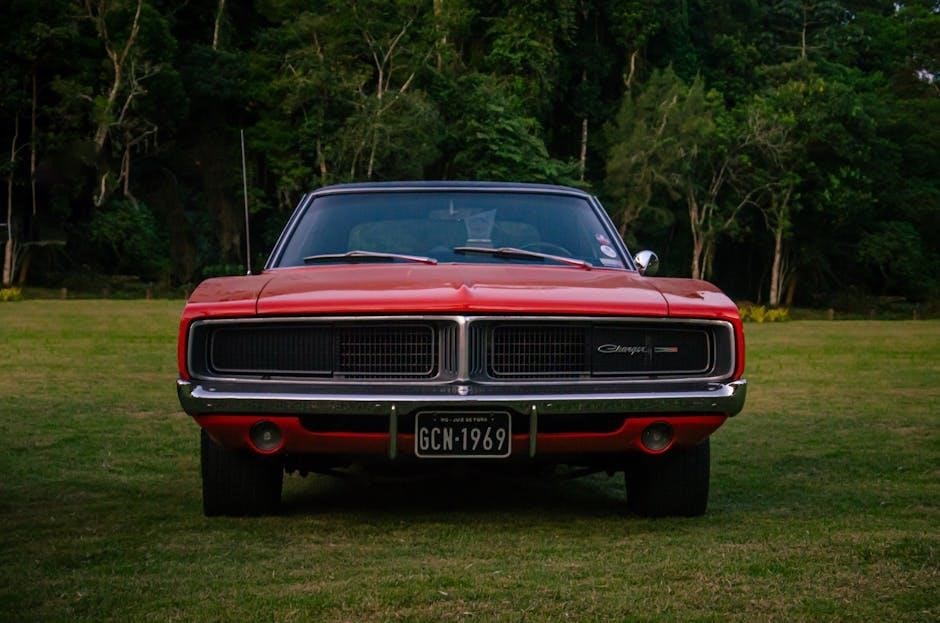
The final stage involves applying the included stickers and adding subtle details that elevate the model’s realism. Carefully position each sticker, referencing the instruction manual for precise placement. Stickers replicate iconic branding, racing stripes, and other visual cues from Dom’s Charger.
Beyond stickers, examine the model for opportunities to enhance detail. Consider utilizing spare parts to refine the engine bay or interior. Small adjustments can significantly impact the overall aesthetic. Ensure all connections are secure and that no wires (if motorized) are exposed.
Inspect the completed model from all angles, verifying symmetry and accuracy. This meticulous attention to detail transforms the LEGO set from a build into a display-worthy replica. Celebrate your accomplishment – you’ve successfully assembled Dom’s Charger!
Motorizing the Dom’s Charger: RC Modifications

Transforming your static LEGO Dom’s Charger into a remote-controlled powerhouse is achievable with readily available components. A popular and relatively straightforward method utilizes the LEGO 42095 RC Stunt Racer set. This provides the necessary motors, battery box, and receiver for basic drive functionality.
Integration involves carefully dismantling the 42095 set and strategically mounting the motor and steering mechanism within the Charger’s chassis. A Power Functions Servo motor is often employed for precise steering control. Modifications may require minor adjustments to the existing structure to accommodate the new components.
Consider gear ratios to optimize speed and torque. Experimentation is key to finding the ideal balance for your desired driving experience. Ensure secure wiring and battery placement for reliable operation. This upgrade unlocks a new dimension of play and display!
Using the 42095 RC Stunt Racer for Motorization
The LEGO 42095 RC Stunt Racer offers a cost-effective and accessible route to motorizing the Dom’s Charger (42111). This set contains the essential components: a Power Functions motor, battery box, and infrared receiver, providing remote control capabilities.
Disassembly of the 42095 is the first step, carefully extracting the motor and steering assembly. These are then integrated into the Charger’s chassis, requiring some creative building to ensure a secure and functional fit. The existing Technic framework of the Charger lends itself well to this adaptation.
Key to success is adapting the steering linkage. Utilizing Technic beams and connectors, a connection between the motor and the front wheels is established. Careful consideration of gear ratios will influence speed and torque. This method provides a satisfyingly simple path to a remote-controlled Dom’s Charger!
Power Functions Servo Motor Integration

Integrating a Power Functions Servo Motor into the LEGO Dom’s Charger (42111) elevates the motorization beyond simple drive, enabling functional steering. This requires careful planning and adaptation within the existing Technic structure.
The servo motor, typically used for precise angular control, is connected to the steering mechanism via Technic linkages. This allows for remote control of the front wheels, replicating realistic steering functionality. Precise alignment is crucial for smooth and responsive control.
Power is supplied via a separate battery box, integrated discreetly within the Charger’s chassis. The infrared receiver, also from the Power Functions range, enables remote operation. Combining the 42095 motor for drive and the servo for steering creates a highly functional and engaging remote-controlled build. This adds a layer of complexity and realism to the model!
Light My Bricks LED Light Kit Instructions
The Light My Bricks LED light kit for the LEGO Dom’s Charger (42111) dramatically enhances the model’s visual appeal, bringing the iconic vehicle to life with realistic illumination. Installation requires meticulous attention to detail, following each step carefully to ensure a trouble-free experience.
The kit typically includes various LED components – headlights, taillights, and potentially undercarriage lighting – each requiring specific connection points within the Charger’s structure. The instructions guide you through routing the wiring discreetly, concealing it within the bodywork for a clean aesthetic.
Power is supplied via a USB hub or battery pack (sold separately), connecting to the LEDs through a central control board. Light My Bricks provides an online troubleshooting guide for common issues, ensuring a seamless integration. Remember, these instructions cover the LED kit only, not the core model build.
Troubleshooting the LED Light Kit Installation
Encountering issues with your Light My Bricks kit for the LEGO Dom’s Charger (42111)? Several common problems can arise during installation. First, verify all connections are secure – LEDs firmly seated in their ports and wiring properly connected to the control board. A loose connection is often the culprit for non-illuminating lights.
If lights aren’t functioning, check the polarity. LEDs are diode-sensitive, meaning they only work when connected in the correct orientation. Ensure the positive and negative wires align as indicated in the instructions. Also, confirm the power source (USB or battery pack) is functioning correctly.
Light My Bricks offers a comprehensive online troubleshooting guide addressing these and other potential issues. Refer to their website for detailed diagrams and solutions. Remember to double-check wiring paths to avoid shorts or damage to the components. Patience and careful review of the instructions are key to resolving any installation challenges.
Alternative Instruction Sources (Brick Owl, Internet Archive)
Lost or damaged your official LEGO Dom’s Charger (42111) instructions? Fortunately, several online resources offer alternatives. Brick Owl, a prominent LEGO marketplace, frequently hosts user-submitted instruction scans, including those for this set. You can find them within the set’s dedicated page on their platform.
The Internet Archive is another valuable source. It archives various digital materials, including LEGO building instructions. A searchable entry for set 42111 exists, providing downloadable PDF versions of the manual. The file size is approximately 273.0M.
These platforms offer convenient access to instructions when the original is unavailable. However, verify the completeness and accuracy of downloaded manuals. While generally reliable, user-submitted content may occasionally contain minor errors. Always cross-reference with online building guides if discrepancies arise.
Kyglaring LEGO Instructions and Manuals
Kyglaring provides downloadable instruction manuals for the LEGO Dom’s Charger (42111), offering both Classic and Standard versions. Their platform allows users to search for instructions by set number or keyword, streamlining the process of locating the correct manual.
Specifically, Kyglaring offers PDF and Doc format instructions for set 42111. To access these, users simply click on the provided attachment link. The instructions were last updated on December 6, 2021, at 07:59:09, indicating a relatively recent availability of the resource.
This service is particularly useful for builders seeking an alternative to the official LEGO instructions or those requiring a digital copy for offline access. Kyglaring’s offering complements other instruction sources, ensuring builders have multiple options for successfully completing their Dom’s Charger build.
Resources for Lost or Damaged Instructions
If you’ve misplaced or damaged the instruction manual for your LEGO Dom’s Charger (42111), several online resources can help. The Internet Archive hosts a downloadable version of the building instructions, identified as lego-building-instructions-42111, added on March 15, 2023. This digital copy is approximately 273.0MB in size.
Brick Owl, a LEGO marketplace, also provides access to set instructions, including those for set 42111. This platform allows you to view instructions and even add the set to your wishlist or catalog. It’s a valuable resource for finding replacements.
Furthermore, exploring online LEGO communities and forums can often lead to shared scans or digital copies of instructions from fellow builders. These resources ensure that a lost or damaged manual doesn’t hinder your building experience with the iconic Dom’s Charger.